Method benchmark
MAGE-A4
Use public experimental structures for candidate design and comparisons across multiple models.
AI-ASSISTED TCR DISCOVERY & COMPUTATIONAL ASSESSMENT
Connect target evidence, AI design and structural screening to develop evidence-informed candidates for joint experiments.
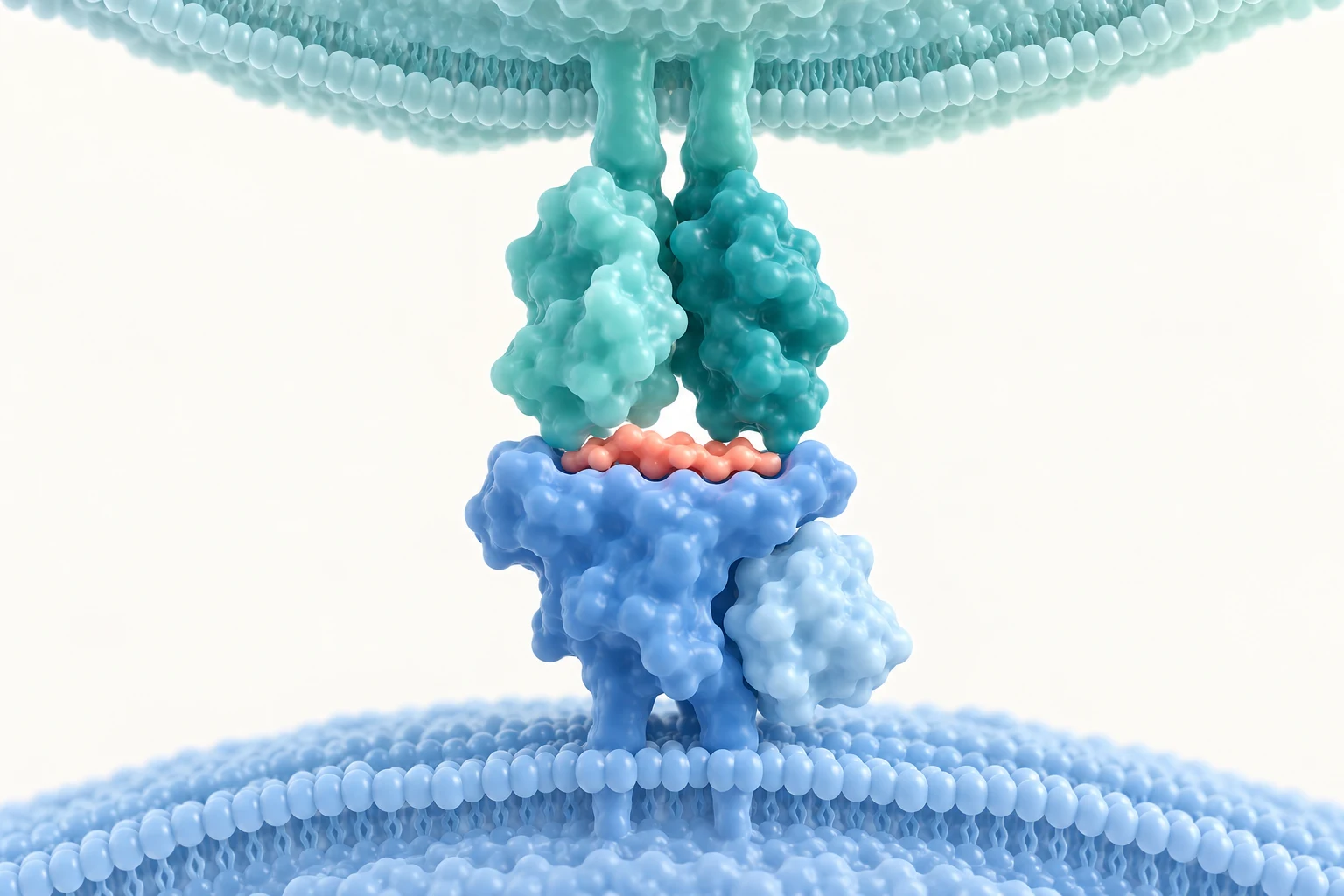
Cells present protein fragments on HLA molecules. A TCR recognizes this combination.
Traceable research candidates with computational support that warrant further experimental assessment.
HOW THE PLATFORM WORKS
Define the target, then propose candidates. Prescreen sequences and public patent information before structural calculations, and carry the evidence into subsequent validation.

Expand a step to explore its research question.
Establish the target, peptide and HLA context.
Check presentation evidence and peptide-HLA structures.
Explore paired sequences within research constraints.
Check sequence validity and public patent neighbors before structural comparisons.
Compare contacts, clashes and disagreements between models.
Organize candidates, evidence and questions for subsequent experiments.
Tools used at different stages include ProteinMPNN, TCRDiff, tFold-TCR, TCRmodel2, MHCflurry, PMGen and PRODIGY. Platform work focuses on workflow integration, rule management and evidence traceability. Tool and data use follows the applicable licenses.
COMPUTATIONAL RESEARCH TO DATE
Method benchmark
Use public experimental structures for candidate design and comparisons across multiple models.
Cross-target research
Screen candidates, separate reference information and compare after freezing the research outputs.
Mutant-epitope exploration
Prioritize patent prescreening, then assess candidate structures and diversity.
Application exploration
Organize a small research candidate panel for discussion of subsequent validation.
FINDING RESEARCH PARTNERS
An existing target, TCR or experimental validation capability can provide the starting point for a clearly scoped, small research question.

FINDING RESEARCH PARTNERS
What is your target? What data do you have? What would you like experiments to answer? We welcome research discussions; scope, responsibilities and rights are agreed separately.
A research overview is enough for initial discussions. Share confidential materials through agreed channels after appropriate arrangements are in place.